Dermal Fillers and Other Injectables With Dr. Frank J. Piro
Offering Those in the Bay Area and San Mateo, Dermal Fillers and Injectables
For individuals who are not yet ready to undergo facial rejuvenation surgery such as facelift or brow lift and for those who would like to enhance the aesthetic results of facial cosmetic surgery, Frank J. Piro, MD, offers cosmetic injectable treatments including dermal fillers in San Mateo, San Carlos, Hillsborough and Burlingame.
He provides a variety of injectable treatment options, including BOTOX ® cosmetic treatment to smooth out facial wrinkles and Juvéderm dermal filler to restore lost volume to the face as well as to fill in lines and wrinkles. By providing patients from San Carlos to Burlingame dermal fillers and other injectables, Dr. Piro helps individuals combat visible signs of facial aging, with minimally invasive procedures and no downtime.
What Injectables (Including Dermal Fillers) Treat
Every day, people are exposed to the harsh sun, pollution and simple gravity — all agents that can cause visible signs of damage to the face over time. If that were not enough, hereditary factors and the natural aging process can further the facial damage. As people age, the body stops generating collagen and elastin, proteins that are fundamental for healthy, young-looking skin.
When some or all of these factors converge, facial skin can start to droop. Fat becomes displaced, leaving some areas of the face hollow-looking. Wrinkles, lines and deep folds appear. Hyperpigmented, dark spots emerge on the skin.
Luckily, facial rejuvenation surgeon Dr. Piro offers injectables, including dermal fillers, to improve these signs of facial damage. Injectables are an effective means of relaxing facial muscles, restoring lost volume, and contouring and lifting features of the face. (He also provides laser skin resurfacing in San Mateo to diminish the appearance of darkly pigmented spots on the face.)
More About BOTOX ® Cosmetic Treatment
 BOTOX ® cosmetic treatment is comprised of a neurotoxin that, when injected, temporarily suspends movement of the targeted facial muscles, thus relaxing the overlying wrinkles as well. This creates the appearance of smooth, wrinkle-free skin for about six months.
Dr. Piro completes BOTOX ® cosmetic treatment in less than an hour with no downtime, so patients can undergo the injectable treatment on their lunch break or on their way to pick their children up from soccer practice. Generally, no anesthesia is required for the minimally invasive procedure, but Dr. Piro can provide a topical anesthetic agent if necessary.
Dr. Piro cleanses the skin at and around the injection site before injecting the solution into the targeted facial muscle. Almost immediately, the facial muscle begins to relax and wrinkles start to look smoother.
Side effects are generally minor, but they may include swelling, bruising or redness at the injection site as well as mild headaches. Those who have undergone BOTOX ® cosmetic treatment can return to work immediately, but they must abstain from lying down for the first four hours after the procedure and from rubbing the treated region for 12 hours. Doing either of these things could cause the BOTOX ® solution to migrate to other regions of the body.
More About Juvéderm Dermal Filler
 Juvéderm dermal filler is a hyaluronic acid (HA)-based gel. Hyaluronic acid is a naturally occurring substance found in the body that helps skin cells retain moisture. When injected, hyaluronic acid also helps bolster facial tissues that have lost volume or elasticity. By boosting volume in the targeted area, Juvéderm fills in and smoothes out facial wrinkles and folds for results that last approximately six to nine months.
Dr. Piro performs Juvéderm dermal filler treatment in less than one hour, so individuals can receive the treatment on a lunch break or on their way home from the gym. No anesthesia is usually needed, but the San Mateo dermal filler provider can provide topical anesthesia if required.
After cleansing the skin at and near the insertion site, Dr. Piro injects the dermal filler into the targeted area. Nearly instantly, wrinkles appear smoother and diminish in appearance.
In some cases, Juvéderm can also be used to enhance the lips, making them appear temporarily fuller and more feminine.
Side effects are typically mild, but some patients report bruising, redness or swelling at the insertion site. In the first 24 hours after treatment, individuals should avoid rigorous exercise, consuming alcohol and overexposure to the sun or heat.
Dear Dr. Piro,
Today is the “Third-week Anniversary” of my Juvederm application with you. I am absolutely thrilled with the results! It is just what I had hoped for, and I thank you on a daily basis.
Your skill, knowledge, and artistic eye have given me a most natural softening from the lines of time on my face. It is a blessing and a relief for me, both personally and professionally.
Thank you for the beautiful work you did for me. It has made an enormous difference for me!
—With much gratitude, S.F.
See What Dermal Fillers and Other Injectables Can Do for You
Perhaps you have heard that there are certain tricks to improving the aesthetic results of cosmetic surgery. Or, perhaps you are bothered by visible signs of facial aging, but you are not ready to undergo a cosmetic surgery procedure just yet. Either way, now is the time to see, literally, what dermal fillers and other injectables can do for you. Contact Dr. Piro to learn more about your nonsurgical cosmetic treatment options, and then come into the office to witness the rejuvenating effects of injectables for yourself.
To schedule an initial visit with Dr. Piro to find out more about dermal fillers and other injectables, please contact his practice by calling (650) 652-8230 today.
Dermal Fillers FAQs
Do the shots hurt?
The injections are made with a fine 30-gauge needle. If I am injecting into the lips, I do a nerve block, providing complete anesthesia of the lips. If I am doing injections on the skin, I use a topical anesthetic cream. With the use of either anesthetic nerve block or a topical anesthetic cream, the injections are tolerated very well.
How long will the results last?
The most common type of dermal filler is hyaluronic acid based. The results last about one year with this type of filler.
What is a liquid facelift?
I define "liquid facelift" as a nonsurgical way to hide and / or mask visible signs of facial aging, improving the overall cosmetic appearance of the face. Liquid facelift techniques typically involve the use of injectable cosmetic treatments, such as Botox cosmetic treatment, dermal filler treatment and / or laser skin resurfacing treatment, to offer a certain degree of rejuvenation to the face. Although liquid facelift treatment helps stave off the need for facelift surgery, it does not provide the same degree of facial rejuvenation that facelift surgery does.
Botox FAQs
At what age do you recommend starting treatment?
Botox treatment is effective for patients of nearly any age when treating crow's feet (the wrinkles that develop around the corners of the eyes) and forehead wrinkles, such as the vertical wrinkles that often appear between the eyebrows. The important factor to keep in mind when deciding at what age to begin treatment is how long Botox results last and how much maintenance is required to maintain the results. The effects of Botox last from three to four months. If you wish to maintain the results, you will need injections at least three times a year. Based on these needs, each patient must make an individual decision as to what age Botox treatment should begin.
Does Botox help stop sweating?
Botox is used in the palms and axillary (under arm) regions to help sweating. Local injections do block sweat glands and reduce sweating.
 To learn more about our Plastic Surgery Services, please contact us at (650) 652-8230 today to schedule an appointment.
*required fields

Injectable collagen or fat can help improve the skin's texture by filling in the laugh lines and facial creases that often occur with aging.
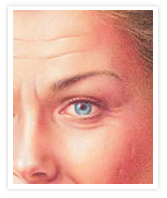
Years of squinting and other facial muscle movements can take their toll on the eye area, leaving crow's feet and other noticeable lines.
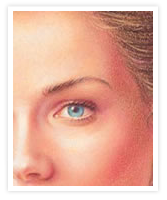
After treatment, the skin around the eye area appears smoother and more taut.

Lines and creases that form around the mouth are usually caused by gravity and a breakdown of tissues beneath the skin.

The lower face appears firmer and smoother after treatment with injectables. Lines around the mouth are filled in and nearly imperceptible.

With regular follow-up treatments, your refreshed look can be easily maintained.